How to improve focus and concentration naturally: the VapoCept guide
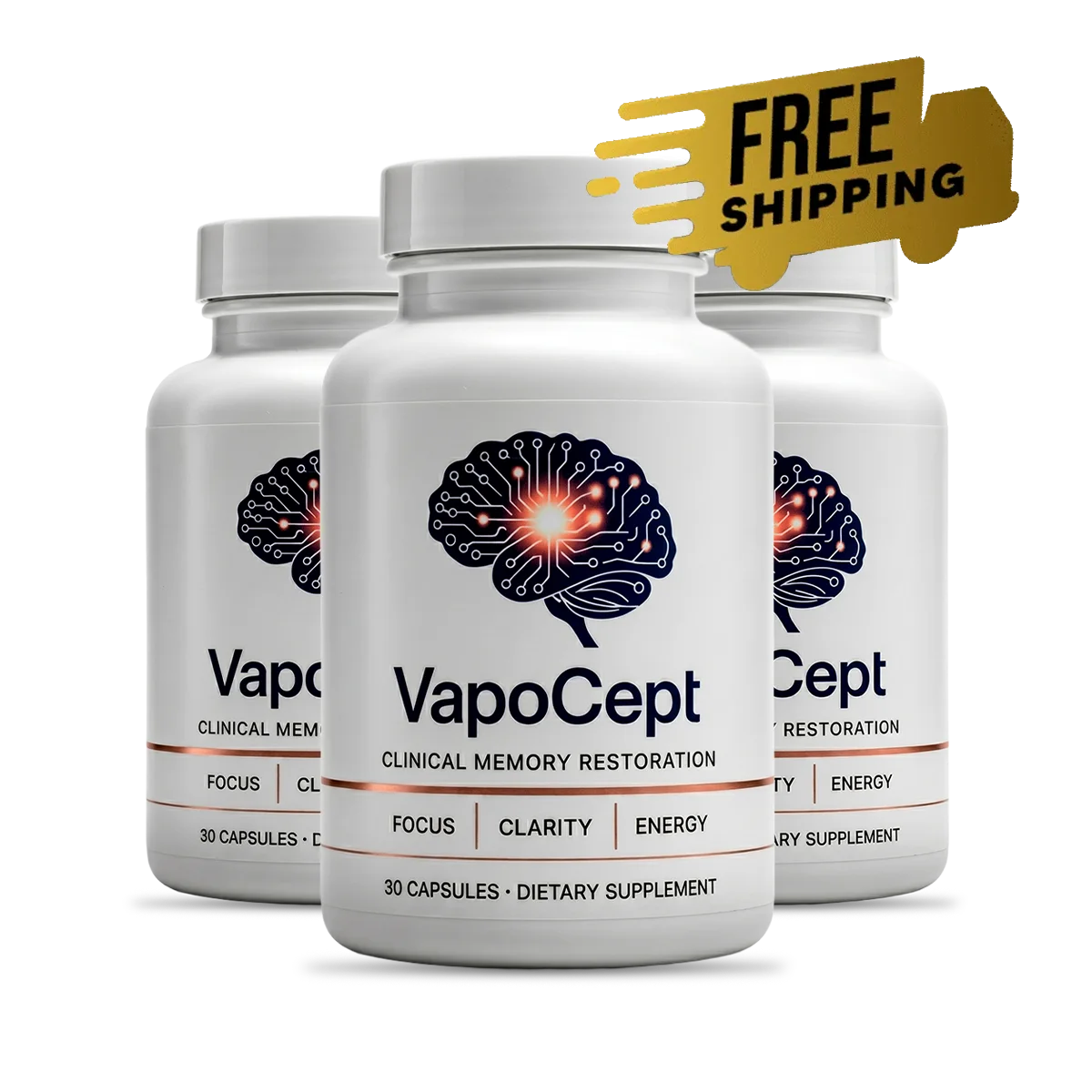
Revised September 30, 2026 · checked against the published panel and the sources below. The desk is not a medical provider, and this article is educational rather than medical advice.
Improving focus and concentration naturally comes down to a short list of everyday habits — sleep, movement, nutrition, hydration and how you manage attention itself — plus, if you choose, well-studied nutrients that support the physiology behind mental energy. It is about consistency over willpower, and it works alongside, not instead of, professional care when you need it.
The fastest route to sharper focus, in one place.
- The goal
- Reduce the friction that scatters attention, so your mind settles into the task in front of you.
- Biggest levers
- Sleep and movement matter most, followed by steady nutrition and a distraction-free workspace.
- Attention trick
- Work in focused blocks with real breaks, and keep your phone out of sight, not just face-down.
- Where supplements fit
- Nutrients like B-vitamins and nitric-oxide amino acids can support the routine, but they are not a treatment.
- Timeframe
- Sleep and a pre-work walk help the same day; diet and fitness build over weeks, and results vary.
If you have ever re-read the same paragraph three times, you know that concentration is not a switch you flip — it is a state you set up conditions for. The good news is that most of those conditions are within your control. This guide walks through them in order of impact and shows where a nootropic capsule like VapoCept can play a supporting role.

Why is concentration so hard to hold?
Attention is a limited resource, and the modern world is engineered to spend it. Every notification, open tab and background worry taxes the same mental budget you are trying to spend on one task. Add a short night’s sleep or a blood-sugar dip, and the budget shrinks further. Improving focus is really about two moves: reducing the drains and supporting the supply. The habits below do both.
What are the most effective habits?
1. Protect your sleep first
Sleep is when the brain consolidates what you learned and clears metabolic by-products. Even one short night measurably reduces attention, working memory and mood the next day — the pooled effect across dozens of controlled studies is quantified in Lim and Dinges’ meta-analysis in Psychological Bulletin (2010). Seven to nine regular hours — with a consistent bedtime and a dark, cool room — is the single highest-return habit for concentration, which is why our nootropic ingredient guide calls it the foundation everything else sits on.
2. Move before you need to focus
Exercise increases blood flow to the brain and supports the neurochemistry behind attention. A brisk 10-to-20-minute walk before demanding work is a reliable, same-day lift, and a systematic review with meta-analysis by Northey and colleagues, British Journal of Sports Medicine (2018) found that regular exercise interventions improved cognitive performance in adults over 50. You do not need a gym — walking, cycling and bodyweight movement all count.
3. Eat for steady energy
Concentration runs on stable blood sugar. Sharp spikes and crashes from refined carbohydrates pull attention with them, while whole foods release energy more evenly. Build meals around vegetables, beans and whole grains, add protein at each meal, and include healthy fats from nuts, seeds and oily fish.
See how VapoCept fits a focus routine →
4. Design a distraction-free workspace
Willpower is a poor substitute for environment. Put your phone in another room — out of sight beats face-down — close tabs you are not using, and give your eyes a clear, uncluttered field. Small frictions removed in advance save enormous amounts of attention later.
5. Work in focused blocks
Attention comes in waves, so work with them. A simple rhythm — a focused block of deep work followed by a genuine break away from screens — keeps you fresher than grinding straight through. During the block, do one thing: switching between tasks carries a measurable time cost, which Rubinstein, Meyer and Evans, Journal of Experimental Psychology: Human Perception and Performance (2001) quantified in the laboratory.
6. Stay hydrated
Even mild dehydration nudges concentration and mood in the wrong direction. Keep water within reach, and treat unsweetened tea or coffee as steadier choices than sugary drinks, which spike and crash blood sugar. Caffeine itself is best understood as an alertness aid rather than a memory enhancer, a distinction drawn carefully by Nehlig, Journal of Alzheimer’s Disease (2010).

Which habits work fastest? An at-a-glance table
A “fast” habit is one you feel the same day; a “slow” habit reshapes your baseline over weeks. Both matter. This table sorts the core habits by how quickly they help and how much effort they ask.
| Habit | Typical time to notice | Everyday effort |
|---|---|---|
| Phone out of the room for deep work | Same session | Low |
| 10-20 min walk before focus work | Same day | Low |
| Focused blocks with real breaks | Same day | Low |
| Consistent 7-9 hours of sleep | Days | Medium |
| Steady, whole-food nutrition | Days to weeks | Medium |
| Regular aerobic exercise | Weeks | Higher |
Where do supplements fit in?
Supplements are a supplement to the habits above, not a substitute, and never a treatment for any condition. That said, a few nutrients support the physiology that focus depends on. Niacin (vitamin B3) contributes to normal energy-yielding metabolism and nervous-system function; nitric-oxide amino acids like L-arginine and L-citrulline support the healthy blood flow that delivers oxygen to a working brain, a pathway reviewed by Toda, Ayajiki and Okamura, Pharmacological Reviews (2009). For the individual actives themselves, our guide to the best nootropic ingredients for memory and focus takes each one in turn. VapoCept brings these together in one daily capsule — you can read how citrulline and nitric oxide support the brain for the mechanism.
Make it a daily habit
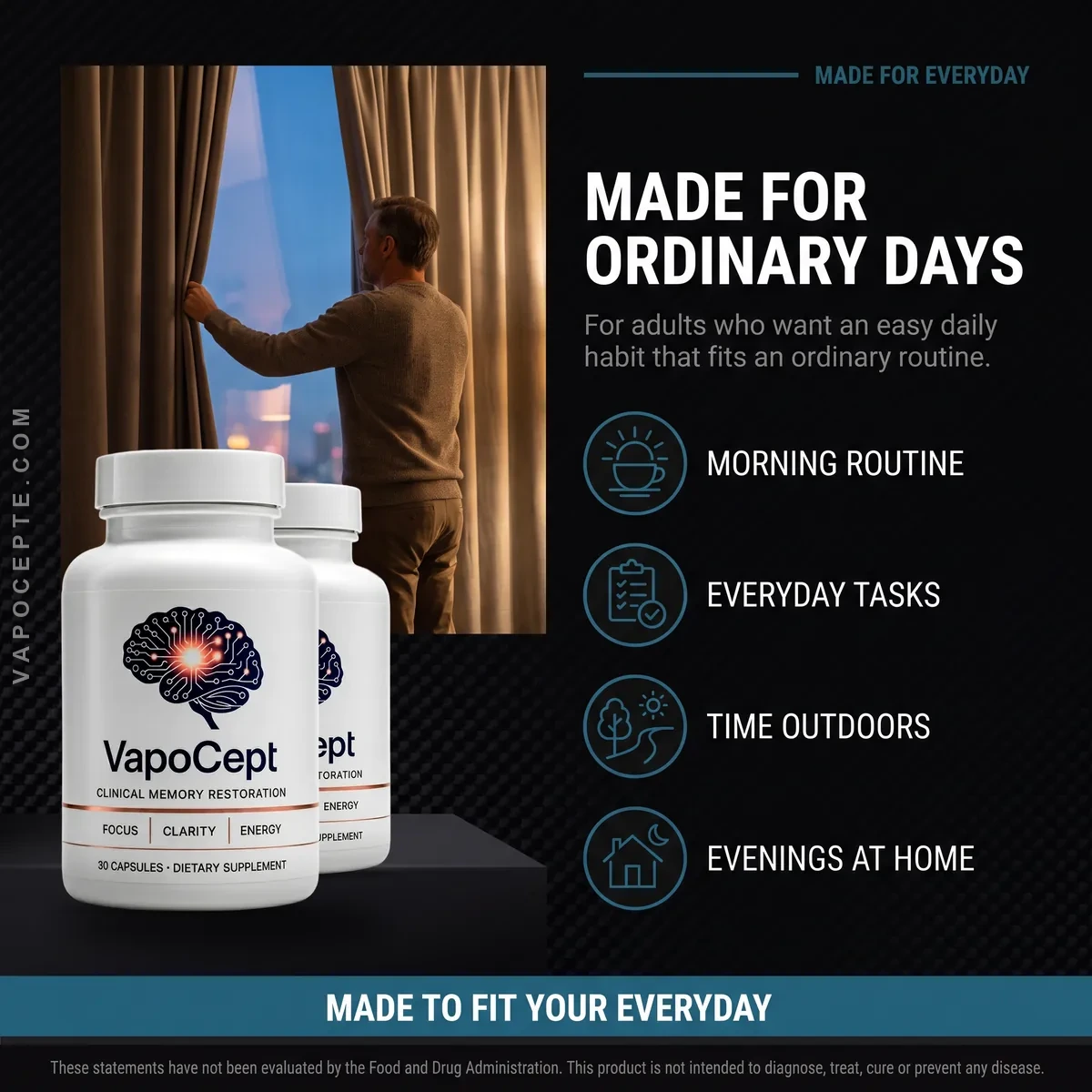
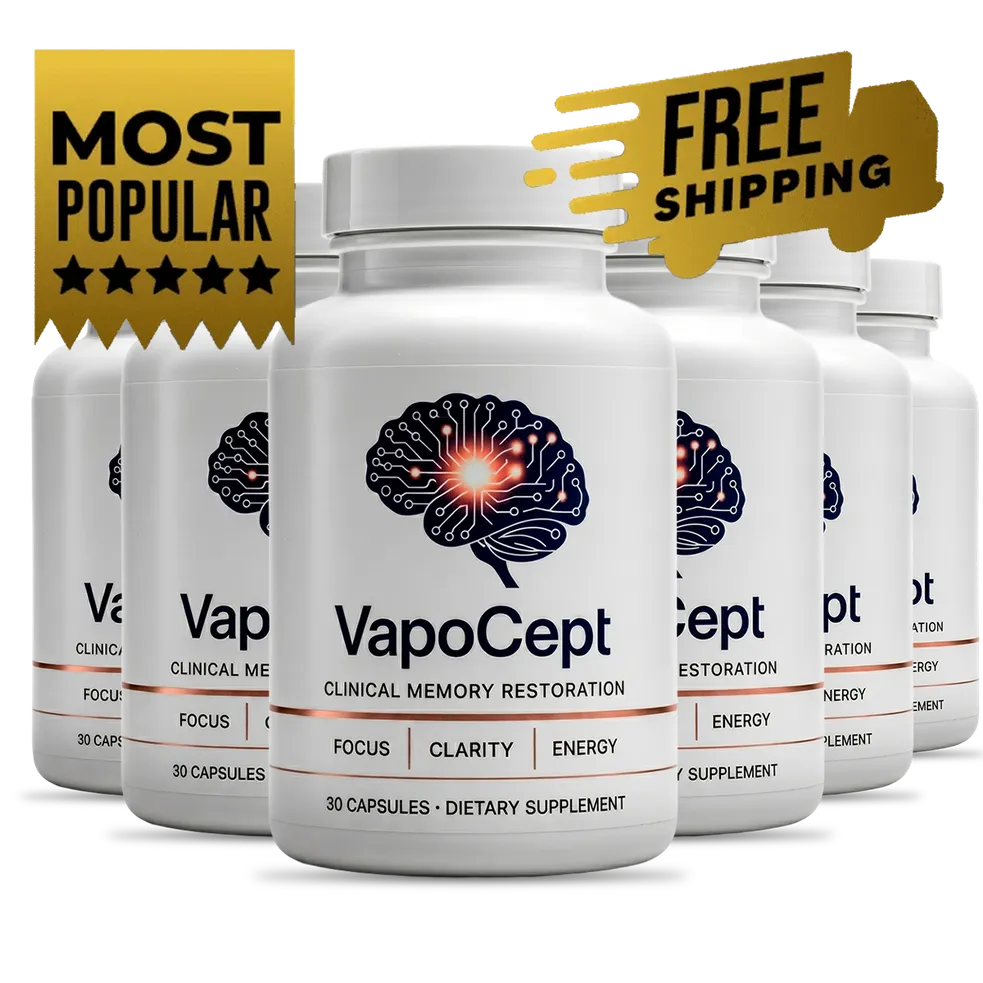
VapoCept is a once-daily capsule pairing nitric-oxide amino acids with niacin and beta-alanine. The six-bottle bundle is the best value at $49 per bottle, with free U.S. shipping and a 60-day guarantee.
Order VapoCept — from $49/bottleHow do you build a simple daily routine?
The best routine is the one you will keep. Rather than overhauling everything at once, stack one small habit at a time until each feels automatic:
- Anchor a consistent wake and sleep time so the day starts rested.
- Walk for ten minutes before your first block of demanding work.
- Put your phone in another room during focus blocks.
- Eat a protein-and-fibre breakfast to keep energy steady.
- Work in focused blocks with real, screen-free breaks.
- Take any supplement at the same time daily — for VapoCept, one capsule with your morning water.
| Time of day | Focus habit | Why it helps |
|---|---|---|
| Morning | Water + one VapoCept capsule + protein breakfast | Steady energy and a consistent cue to start the day. |
| Before deep work | 10-20 min walk, phone away | Blood flow up, distractions down. |
| Work blocks | Focused block, then a real break | Works with attention’s natural rhythm. |
| Evening | Wind-down, consistent bedtime | Protects the sleep that resets focus. |
When should you talk to a doctor?
Natural habits are for supporting healthy attention, not for treating a condition. Speak with your doctor if focus problems are new, persistent or worsening, if they come with low mood or anxiety, or before adding a supplement when you are pregnant or nursing, under 18, or taking medication. Sometimes a concentration problem has a treatable cause worth checking.
Frequently asked questions
What is the fastest way to improve focus naturally?
The fastest levers are same-day ones: a good night’s sleep, a short walk before deep work, removing your phone from the room, and working in focused blocks with real breaks. These reliably sharpen attention within a day, while diet, fitness and supplement habits build over weeks.
Which foods help concentration?
Whole, steady-energy foods help most: vegetables, beans and whole grains for slow-release carbohydrates, protein at each meal, and healthy fats such as nuts, seeds and oily fish. Staying hydrated and not skipping meals keeps blood sugar and attention steadier.
Does sleep really affect focus that much?
Yes. Sleep is when the brain consolidates memory and clears metabolic waste, and even one short night measurably reduces attention and working memory the next day. Seven to nine regular hours is the single highest-return habit for concentration.
How does exercise improve concentration?
Movement increases blood flow to the brain and supports the chemistry behind attention and mood. Even a brisk 10-to-20-minute walk before demanding work can lift focus, and regular aerobic activity improves cognitive performance over time.
Can supplements help focus?
Nutrients such as B-vitamins and nitric-oxide amino acids can support the routine, but they are a complement to sleep, movement and diet, not a replacement, and never a treatment for any condition. Medication users should check with a doctor first.
How does VapoCept support focus?
VapoCept is a once-daily capsule combining nitric-oxide amino acids with niacin (vitamin B3) and beta-alanine to support healthy blood flow and normal energy metabolism — the physiology behind steady mental energy — as part of a focus-friendly routine.
Try VapoCept risk-free for 60 days →
VapoCept is a dietary supplement, not a treatment for any medical condition. These statements have not been evaluated by the Food and Drug Administration. This product is not intended to diagnose, treat, cure or prevent any disease. Always consult a qualified healthcare professional about your individual needs.
References & further reading
- Lim J, Dinges DF. A meta-analysis of the impact of short-term sleep deprivation on cognitive variables. Psychological Bulletin, 2010. PMID 20438143
- Northey JM, Cherbuin N, Pumpa KL, et al. Exercise interventions for cognitive function in adults older than 50: a systematic review with meta-analysis. British Journal of Sports Medicine, 2018. PMID 28438770
- Rubinstein JS, Meyer DE, Evans JE. Executive control of cognitive processes in task switching. Journal of Experimental Psychology: Human Perception and Performance, 2001. PMID 11518143
- Nehlig A. Is caffeine a cognitive enhancer? Journal of Alzheimer’s Disease, 2010. PMID 20182035
- Toda N, Ayajiki K, Okamura T. Cerebral blood flow regulation by nitric oxide: recent advances. Pharmacological Reviews, 2009. PMID 19293146
- National Heart, Lung, and Blood Institute (NHLBI). Sleep Deprivation and Deficiency. nhlbi.nih.gov/health/sleep-deprivation
- National Institutes of Health, Office of Dietary Supplements. Niacin — Fact Sheet for Health Professionals. ods.od.nih.gov/factsheets/Niacin-HealthProfessional
- National Center for Complementary and Integrative Health (NCCIH). Dietary and Herbal Supplements. nccih.nih.gov/health/dietary-and-herbal-supplements
These references describe the habits and ingredients in general terms and do not constitute evidence that any product treats, cures or prevents any condition.
Keep reading: the best nootropic ingredients for memory and focus · L-citrulline and nitric oxide for brain health · back to the VapoCept blog · homepage.